Originals
Learn About Japan Through Our Original Games
The stories behind the Five Min Games originals: goldfish scooping, temple stamps, hanafuda cards, castle towns and Japanese art, with a few facts to take with you.
Most of the games on Five Min Games come from independent developers. A handful, though, we made ourselves, and many of them are inspired by everyday Japanese culture: summer festivals, tea rooms, temples and old castle towns. Our team is based in Hiroshima, and we wanted to make games that are fun in five minutes but also leave you knowing something new.
Here is a short tour of the originals and the real traditions behind them.
Goldfish scooping at a summer festival
In Japan, summer festivals (natsu matsuri) fill streets and shrine grounds with food stalls, lanterns and games. One of the most famous stall games is kingyo-sukui, goldfish scooping. You get a small plastic frame covered with thin paper, called a poi, and try to scoop goldfish into a bowl before the wet paper tears. The trick is to move gently, keep most of the poi under water, and lift fish near the frame's edge where the paper is strongest.
Our Goldfish Scoop game captures that feeling. Hold to dip the poi, let go to lift, and watch the paper's strength drop with every fish you catch. Bigger fish are worth more, but they are heavier on the paper.
Collecting temple stamps
Many temples and shrines in Japan offer a goshuin, a handwritten seal given as a record of your visit. A monk or shrine attendant writes the name of the temple and the date in brush calligraphy and adds red stamps, usually in a special folding book. Some people travel across the country collecting them, and every one looks different.
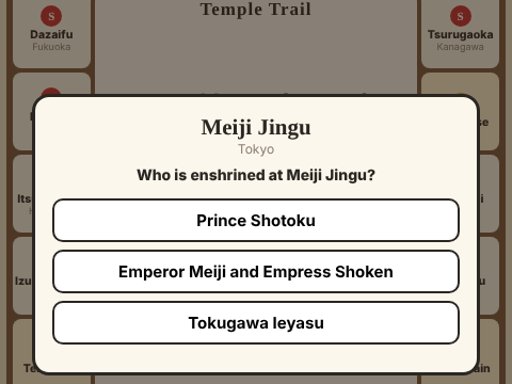
In Temple Trail, you roll dice around a board of 18 famous temples and shrines, from Chuson-ji in the north to Dazaifu Tenmangu in Kyushu. Answer a short quiz about each place to earn its stamp. The quiz facts were checked against the temples' own information, so it is a quick way to learn some real geography and history.
Hanafuda, the flower cards
Hanafuda is a Japanese card deck with 48 cards, four for each month of the year, decorated with seasonal plants: pine for January, cherry blossoms for March, maple leaves for October. The most popular game played with them is Koi-Koi. Our Hanafuda Koi-Koi lets you play it against the computer, and we wrote a full beginner's guide to Koi-Koi if you want to learn the rules first.
Defending a castle town
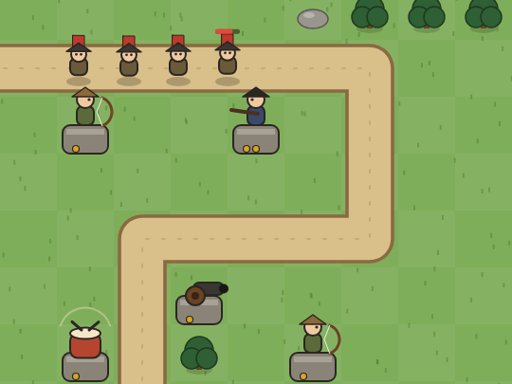
Japanese castles, with their tall stone walls and layered white towers, were the centers of towns during the Edo period. Merchants and craftspeople lived around them in what is called a jokamachi, a castle town. In Castle Guard, you protect the castle by placing archers, musketeers, cannons and war drums along the road. The war drum does not attack at all; its beat slows enemies down, a nod to how drums were used on real battlefields to send signals.
Spotting the difference in old Japan
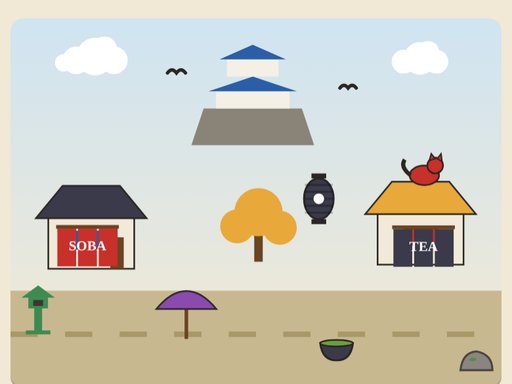
Spot the Difference: Japan uses four scenes: a summer festival at night, a tea room, a Japanese garden and a castle town street. Look closely and you will find lanterns, noren curtains hanging in shop doorways, stone lanterns in the garden and a hanging scroll in the tea room alcove. The differences change every time you play, so you will look at the scenes in a new way each round.
Tea bowls, bamboo and antiques
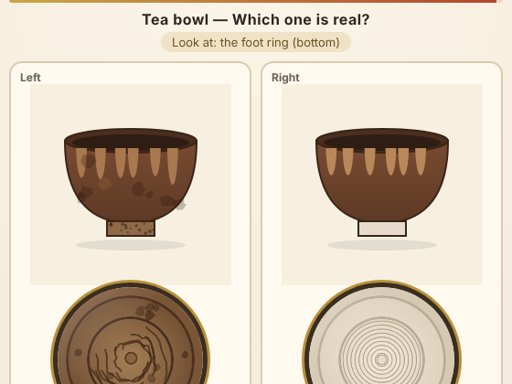
Two of our puzzle games come from the world of tea and antiques. In Roll to the Bowl, you draw bamboo ramps to roll a ball into a tea bowl. Bamboo is everywhere in traditional Japanese crafts, from tea whisks to garden fences. In Antique Detective, you compare two objects under a magnifier and pick the genuine old piece: a tea bowl, a celadon vase, a bronze vessel. Real antique experts look at the same clues the game uses, such as natural wear, the way glaze ages and the details of how an object was made.
Art through the ages
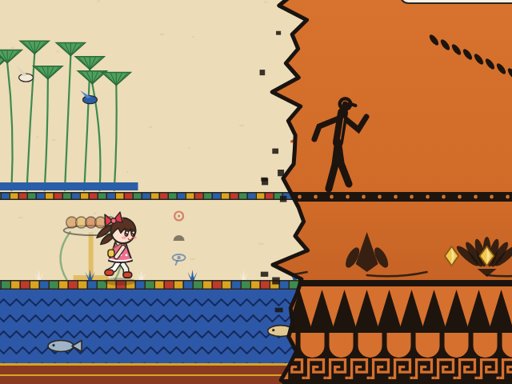
Mural Dash is a runner that takes you through six famous art styles, from an Egyptian tomb wall to a Japanese woodblock print. Woodblock prints, called ukiyo-e, were a popular art form in Edo-period Japan. Artists such as Hokusai and Hiroshige made prints of landscapes, actors and everyday life that were sold cheaply to ordinary people, and they later influenced painters in Europe.

New Year games: karuta and fukuwarai
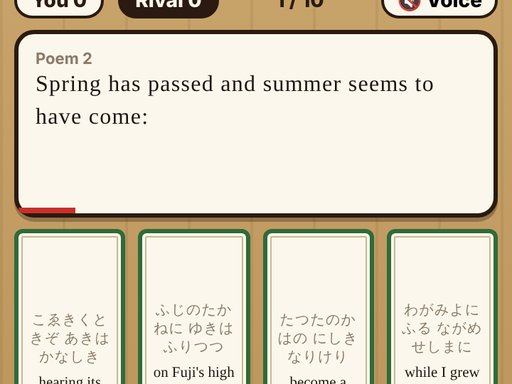
New Year (shōgatsu) is the biggest holiday in Japan, and families still play a few traditional games together. In karuta, a reader recites the first half of a poem from the Hyakunin Isshu, a collection of 100 classic poems compiled in the early 13th century, and players race to slap the card that shows the poem's ending. Competitive karuta is a serious sport in Japan. Our Hyakunin Isshu Karuta includes 22 famous poems, each with an English translation, so you can play without reading Japanese.
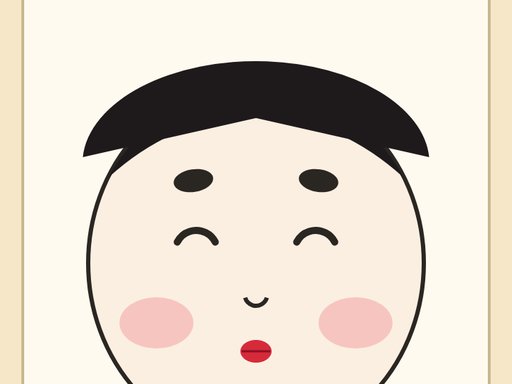
Fukuwarai, meaning "lucky laughter," is a gentler New Year game: a blindfolded player places paper eyes, eyebrows, a nose and a mouth on a blank face, and everyone laughs at the funny result. In Fukuwarai, you get a few seconds to memorize the face first, then the blindfold goes on.
Toys, paper and brushes
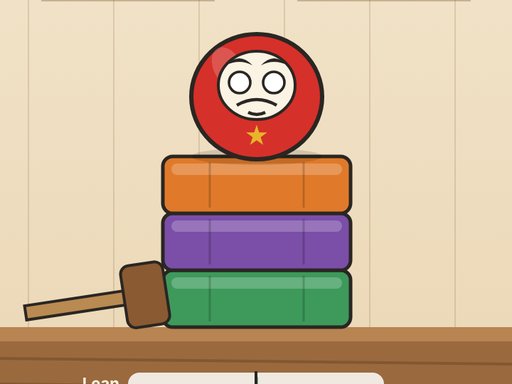
Daruma otoshi is a wooden toy: a stack of colored blocks topped by a daruma doll. You knock the blocks out one by one with a small mallet, trying not to topple the doll. Daruma dolls are good-luck charms, and people traditionally paint in one eye when they make a wish and the other when it comes true. Our Daruma Drop paints an eye each time you clear a stage.
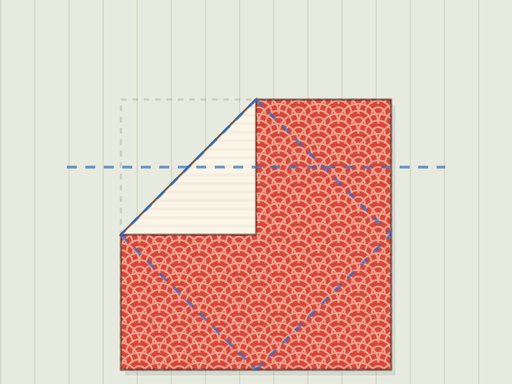
In Origami Fold, you fold a single square of paper into simple models such as a house, a sailboat and a rocket. Many Japanese children learn origami at school, and folds like the "cushion fold," which brings all four corners to the center, are the starting point for many traditional models.
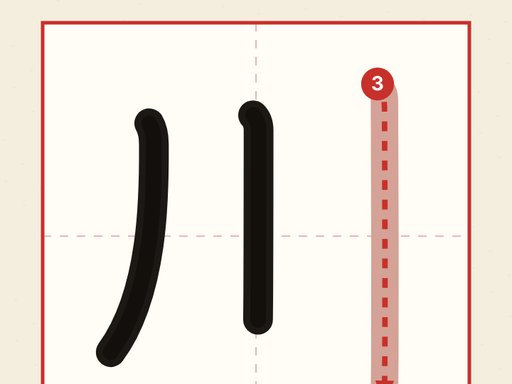
Japanese children also practice writing kanji, the characters borrowed from Chinese, with the strokes in a set order. In Kanji Brush Trace, you trace 30 kanji such as 山 (mountain), 川 (river) and 夢 (dream) with a brush and learn what each one means.
Lunch, Japanese style
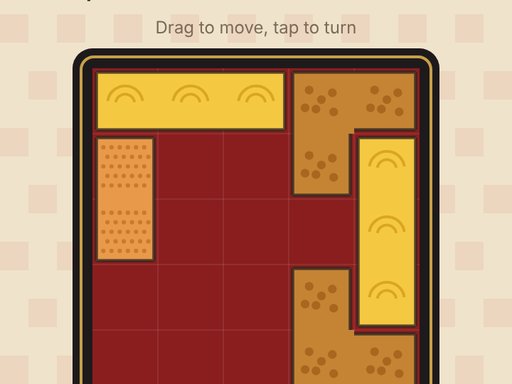
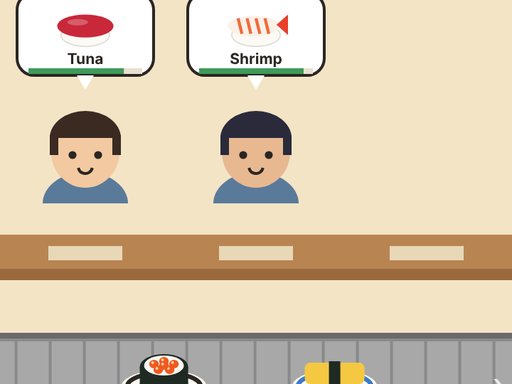
A bento is a packed lunch arranged neatly in a box, often with rice, a rolled omelet called tamagoyaki, fried chicken and colorful vegetables. Fitting everything in without gaps is a small art, and that is the puzzle in Bento Box Puzzle. At a kaiten-zushi restaurant, plates of sushi travel past customers on a conveyor belt and you simply take what you want. In Sushi Spin, you are the one serving the customers, and the plates move faster as the lunch rush builds.
Festival nights and old-fashioned toys
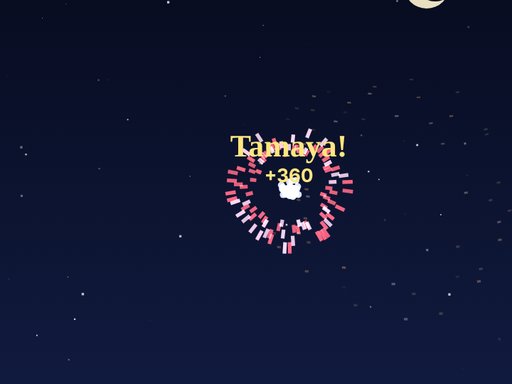
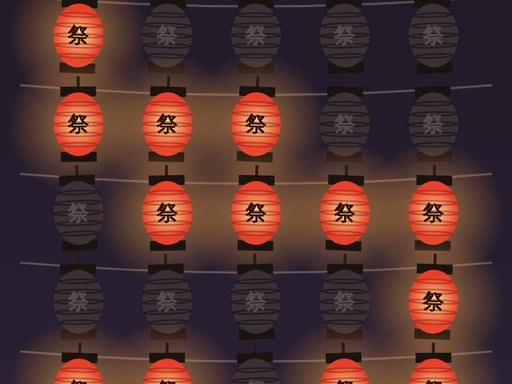
Summer in Japan means hanabi taikai, big fireworks festivals held over rivers and bays. When a great shell bursts, people in the crowd shout "Tamaya!" or "Kagiya!", the names of two famous fireworks makers from the Edo period. You can try the timing yourself in Fireworks Festival. Festival streets are lined with chōchin, paper lanterns, and Lantern Lights turns lighting them into a logic puzzle.
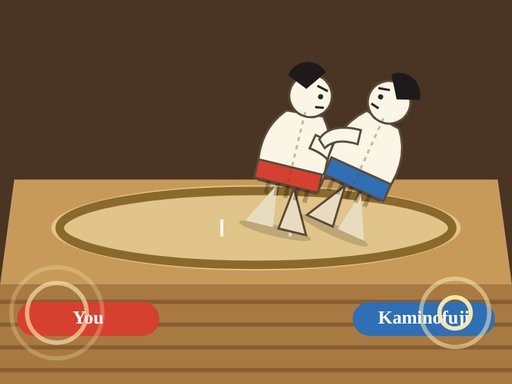
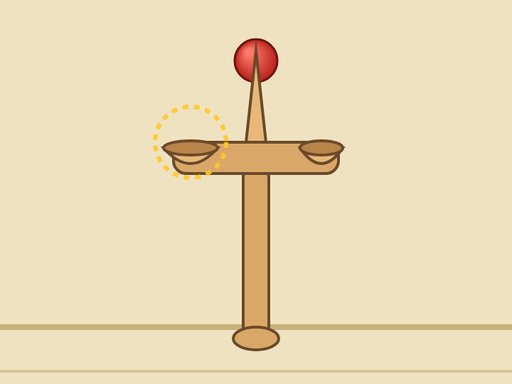
Two more of our games come from old toys. In kami-zumo, paper sumo wrestlers stand on a box and players tap the box to make them push; Paper Sumo lets you play against the computer or a friend. Kendama, a wooden handle with cups and a ball on a string, is still popular with kids and has competitive players around the world. Kendama lets you practice the basic catches.
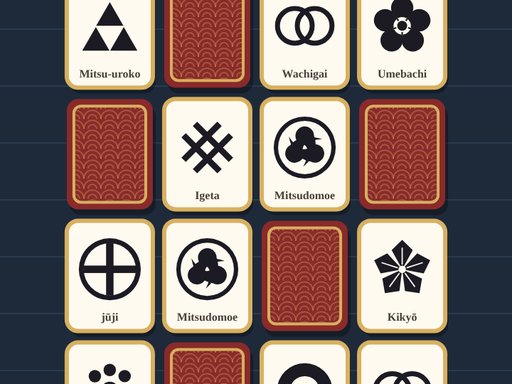
Finally, kamon are family crests, simple black-and-white designs that families have passed down for centuries. You still see them on formal kimono, temple curtains and roof tiles. Kamon Match is a memory game with twelve classic crests and their meanings.
Sweets worth sharing: yokan and castella
Yokan is a firm sweet made from red bean paste, sugar and agar, usually sold in a block and served in thin slices with green tea. Castella is a soft sponge cake that arrived in Nagasaki with Portuguese traders in the 1500s and became a famous local specialty. Both are cut and shared, which makes them perfect for two fairness games: in Yokan Cut you swipe to slice equal pieces, and in Castella Slicer you cut the loaf exactly as each customer asks.
For a longer play session, Wagashi Match turns the same sweets into a 30-stage match-3 puzzle. The pieces are real kinds of wagashi: daifuku (soft rice cake filled with sweet bean paste), sakura mochi wrapped in a pickled cherry leaf, kashiwa mochi wrapped in an oak leaf, skewered dango, dorayaki pancakes and nerikiri, the delicate flower-shaped sweets often served at tea ceremonies.
Why we make our own games
Original games let us control the details that matter for a short break: fast loading, clear rules, rounds that end on their own, and no surprise pop-ups inside the game. They also let us share a little of the culture around us. We add a new original every few weeks, and you can see the latest ones in the "What's new" section on the home page.