Strategy
Sorting Puzzles: Strategies That Actually Work
How to beat color sort, ball sort and parking sort puzzles: use the empty space, finish one color at a time, read the bottom layers and think two moves ahead.
Sorting puzzles are everywhere right now. The rules change a little from game to game, but the core is always the same: you have containers holding mixed-up items, and you move items until each container holds a single color or type. Candies in tubes, fish in tanks, cars in garages, jewels on a conveyor. They look relaxing, and they are, until a level suddenly leaves you with no legal moves.
The good news is that almost all sorting puzzles reward the same handful of habits. Learn these and you will get stuck far less often.
1. Treat empty space as your most valuable resource
In a tube-sorting game, an empty tube is like a free hand. It lets you set something aside while you rearrange other tubes. Beginners often fill the empty tube on their first move just because they can. Try the opposite: keep the empty tube empty as long as possible, and only use it when it unlocks a sequence of several useful moves.
The same idea applies to the half-full tubes. A tube with only one color in it, even if it is not full, is almost as good as an empty one, because you can keep stacking the same color on top.
2. Finish one color at a time
It is tempting to make small progress everywhere. Instead, pick one color that is close to finished and complete it. A completed container is out of the way for the rest of the level, which makes the remaining board simpler. It also tends to free a container that was holding things you need.
3. Read the bottom, not just the top
The top item of each container tells you what you can move right now. The items at the bottom tell you where the level will get hard. Before your first move, look at which colors are buried deepest. Those are the ones you will have to dig out last, so do not bury them further by stacking unrelated colors on top.
4. Think two moves ahead
Before you move an item, ask what move it allows next. A move that only shuffles one item to another tube without opening anything new is often a waste. Good moves usually do one of three things: complete a color, empty a container, or uncover an item that can go somewhere immediately.
5. Watch for dead ends
You are in trouble when every container's top item can only go onto a different color. When you see that coming, stop and undo if the game allows it, or restart. Restarting early costs a few seconds; pushing on to a dead end costs the whole level. Short levels are designed to be restarted, so there is no shame in it.
How the rules differ in our sorting games
Each of our sorting games adds its own twist, and it helps to spot it in the first level:
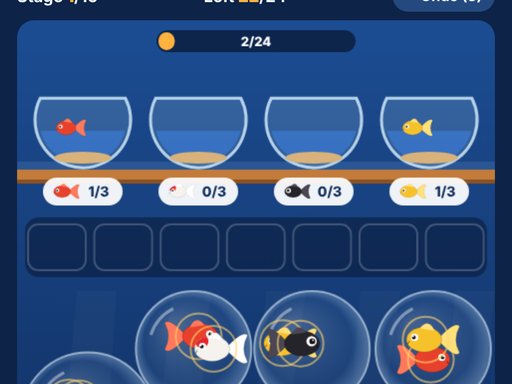
- Goldfish Bowl Sort sends each fish straight to the bowl for its kind, three to a bowl. Fish with no matching bowl wait in a tray of seven, so the tray is your empty space: keep it as clear as you can.
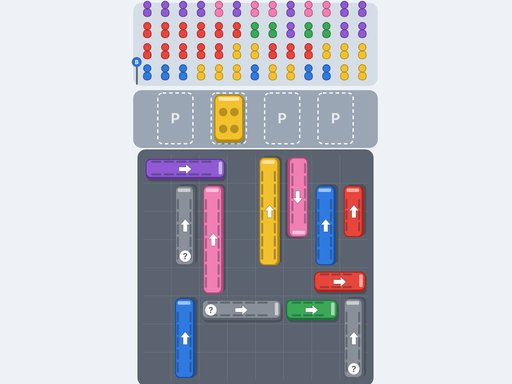
- Bus Jam Puzzle turns sorting into a parking lot. Passengers board only a bus of their own color, so the order in which you drive buses out matters more than speed.
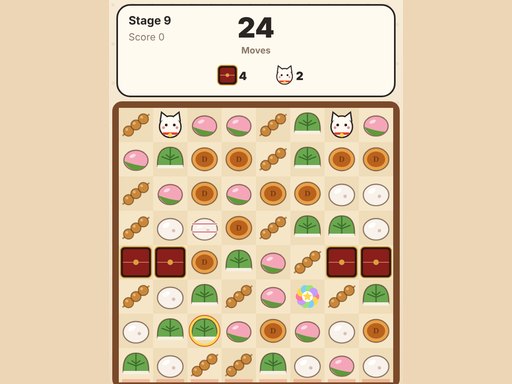
- Wagashi Match is a match-3 with Japanese sweets. Instead of containers you sort by swapping neighbors, but the habit of reading the bottom of the board first still applies.
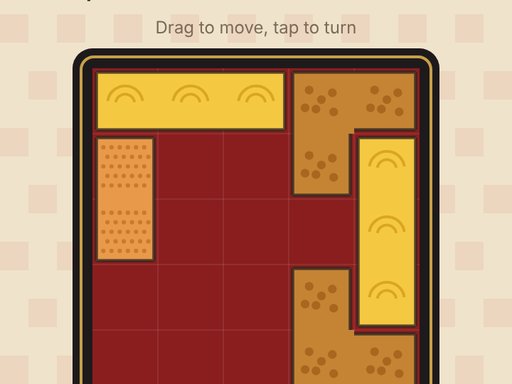
- Bento Box Puzzle is a packing puzzle: every food has a shape, and the box must end up with no gaps. Place the biggest, most awkward pieces first.
Why sorting puzzles are good for a short break
Sorting puzzles use planning and visual attention, but they rarely need math, reading or fast reflexes. Most levels take a minute or two, and there is no penalty for taking your time. That makes them a nice change of pace after reading or writing, and an easy game to stop when your break timer rings.
If you like the planning side of sorting puzzles, try Train Tracks or Lantern Lights next. They use the same "do not trap yourself" thinking, with every move visible on one board.